Polylang Pro の設定方法
2026/04/03追記
SEO SIMPLE PACK 問題
- メイン言語以外の言語のトップページのOG:urlがメイン言語のトップページになる
- 中国語(簡体)サイトのlocaleがUS_enになる
以下で解決する↓↓↓
/**
 * SIMPLE SEO PACK Polylang対応
 */
function my_ssp_og_locale( $locale ) {
	if ( function_exists( 'pll_current_language' ) ) {
		$lang = pll_current_language( 'slug' );

		// 中国語簡体のみ上書き
		if ( 'zh' === $lang ) {
			return 'zh_CN';
		}
	}

	return $locale;
}
add_filter( 'ssp_output_og_locale', 'my_ssp_og_locale', 9999 );

function my_ssp_og_url( $url ) {
	if ( ! function_exists( 'pll_current_language' ) || ! function_exists( 'pll_home_url' ) ) {
		return $url;
	}

	// トップページのみ
	if ( ! is_front_page() ) {
		return $url;
	}

	$lang = pll_current_language( 'slug' );

	// 中国語簡体・繁体・韓国語
	if ( 'zh' === $lang || 'zh-tw' === $lang || 'ko' === $lang ) {
		return pll_home_url( $lang );
	}

	return $url;
}
add_filter( 'ssp_output_og_url', 'my_ssp_og_url', 9999 );
2026/02/28追記
メディア
複製offでメインサイトを作成→内容が固まればページソース複製で他の言語を作成→最後に+マークを押して複製して各言語からメディアを参照できるようにする→納品前に複製onにするのがいいかも
方法1.メイン言語サイト作成後に複製する
メディアライブラリで言語の「+」マークを押して複製すると各言語のメディアページにも追加される。

全部複製が終わったら各言語ページでメディアライブラリーから読み込む
→これをしなくても参照する画像は各言語共通になる。
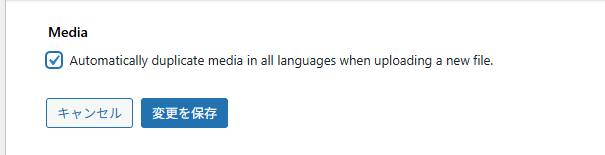
方法2.複製ONにしておく
自動で複製をonにしておかないとメインの言語以外でメディアライブラリが空っぽになってしまう。
翻訳対応
functions.php
if ( function_exists( 'pll_register_string' ) ) {
	pll_register_string(
		'important_notice',
		'Important Notice',
		'重要なお知らせ'
	);

	pll_register_string(
		'nav_home',
		'Home',
		'グローバルナビ'
	);

	pll_register_string(
		'nav_news',
		'News <br>Topics',
		'グローバルナビ'
	);
}
テーマ側
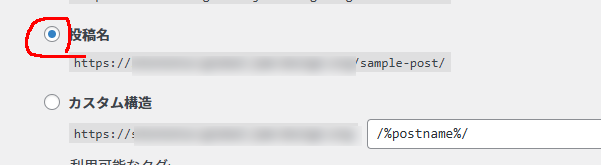
<?php echo esc_html( pll__( 'Important Notice' ) ); ?>各言語同じスラッグにする(無料版だとできない)
WordPressのパーマリンク設定
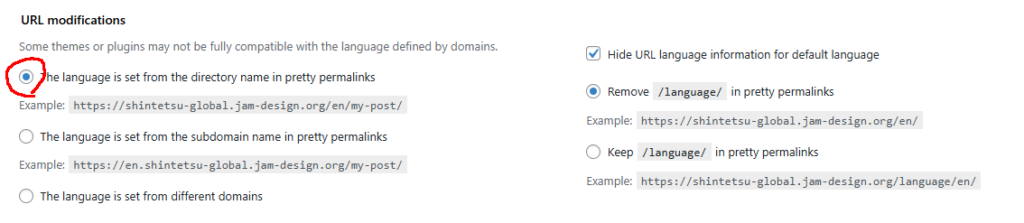
Polylangの設定
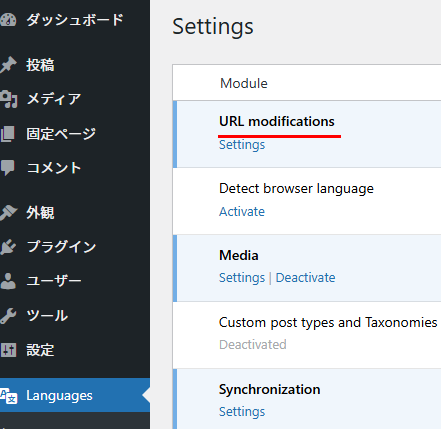
「 The language is set from the directory name in pretty permalinks」を選択する
各言語で異なるfont familyを読み込む
フロント
enqueue-script.php
function my_scripts() {

	// inc/setup.phpにも記述すること
	$locale = get_locale();

	switch ( $locale ) {

		case 'zh_CN': // 中国語(簡体)
			$font_url = 'https://fonts.googleapis.com/css2?family=Noto+Sans+SC:wght@400;600&family=Mukta+Vaani:wght@400;600&display=swap';
			break;

		case 'zh_TW': // 中国語(繁体)
			$font_url = 'https://fonts.googleapis.com/css2?family=Noto+Sans+TC:wght@400;600&family=Mukta+Vaani:wght@400;600&display=swap';
			break;

		case 'ko_KR': // 韓国語
			$font_url = 'https://fonts.googleapis.com/css2?family=Noto+Sans+KR:wght@400;600&family=Mukta+Vaani:wght@400;600&display=swap';
			break;

		default: // 英語(デフォルト)
			$font_url = 'https://fonts.googleapis.com/css2?family=Mukta+Vaani:wght@400;600&display=swap';
			break;
	}

	wp_enqueue_style(
		'google-fonts',
		$font_url,
		array(),
		null
	);

...
}
add_action( 'wp_enqueue_scripts', 'my_scripts' );
css
// 英語
html:lang(en) body {
    font-family: "Mukta Vaani", sans-serif;
}

// 中国語(簡体)
html:lang(zh-CN) body {
    font-family: "Noto Sans SC", sans-serif;
}

// 中国語(繁体)
html:lang(zh-TW) body {
    font-family: "Noto Sans TC", sans-serif;
}

// 韓国語
html:lang(ko-KR) body {
    font-family: "Noto Sans KR", sans-serif;
}
編集画面
add_action(
	'enqueue_block_editor_assets',
	function () {
		// Polylangがないなら何もしない
		if ( ! function_exists( 'pll_get_post_language' ) || ! function_exists( 'pll_current_language' ) ) {
			return;
		}

		$post_id = isset( $_GET['post'] ) ? intval( $_GET['post'] ) : 0;

		// locale 決定(投稿 > 現在言語)
		$locale = pll_get_post_language( $post_id, 'locale' );

		if ( ! $locale ) {
			$locale = pll_current_language( 'locale' );
		}

		// デバッグ(テスト用)
		// wp_add_inline_script( 'wp-blocks', 'console.log("editor locale:", ' . json_encode( $locale ) . ');' );

		$font_url    = '';
		$font_family = '';

		switch ( $locale ) {

			case 'zh_CN': // 中国語(簡体)
				$font_url    = 'https://fonts.googleapis.com/css2?family=Noto+Sans+SC:wght@400;600&display=swap';
				$font_family = '"Noto Sans SC", sans-serif';
				break;

			case 'zh_TW': // 中国語(繁体)
				$font_url    = 'https://fonts.googleapis.com/css2?family=Noto+Sans+TC:wght@400;600&display=swap';
				$font_family = '"Noto Sans TC", sans-serif';
				break;

			case 'ko_KR': // 韓国語
				$font_url    = 'https://fonts.googleapis.com/css2?family=Noto+Sans+KR:wght@400;600&display=swap';
				$font_family = '"Noto Sans KR", sans-serif';
				break;

			default: // 英語(デフォルト)
				$font_url    = 'https://fonts.googleapis.com/css2?family=Mukta+Vaani:wght@400;600&display=swap';
				$font_family = '"Mukta Vaani", sans-serif';
				break;
		}

		if ( $font_url ) {
			wp_enqueue_style( 'my-editor-font', $font_url, array(), null );
		}

		if ( $font_family ) {
			wp_add_inline_style(
				'my-editor-font',
				".editor-styles-wrapper,
				 .editor-styles-wrapper :where(.wp-block-paragraph,.wp-block-heading,.editor-post-title__input,.block-editor-block-list__block){
					font-family: {$font_family} !important;
				}"
			);
		}
	},
	100
);
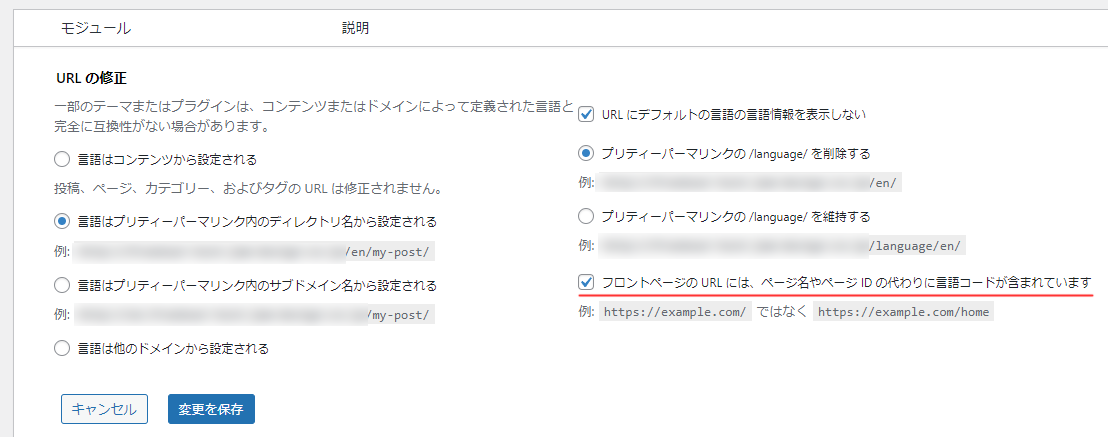
英語トップページのパーマリンクを ドメイン/en/ にする
英語や他の言語のトップページを https://example.com/en/ のようにするには [言語] > [設定] > [URLの修正] で「フロントページの URL には、ページ名やページ ID の代わりに言語コードが含まれています」にチェックを入れる
<?php
	pll_the_languages(
	array(
	'dropdown'      => 1,
	'hide_if_empty' => 0,
	)
	);
?>

<select name="lang_choice_1" id="lang_choice_1" class="pll-switcher-select">
<option value="/en/">English</option>
<option value="/" selected="selected">日本語</option>

</select>
<script type="text/javascript">
document.getElementById("lang_choice_1").addEventListener("change", function(event) {
	location.href = event.currentTarget.value;
})
</script>
注意事項
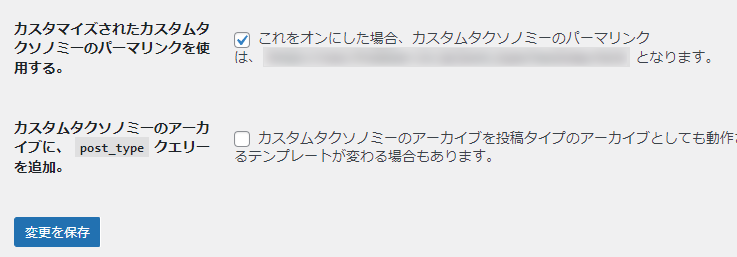
Custom Post Type Permalinks を使用する場合の例
カスタムタクソノミーの場合の設定
register_taxonomy(
	'products_cat',
	'products',
	array(
		'labels'       => array( 'name' => '製品カテゴリー' ),
		'hierarchical' => true, // カテゴリー.
		'rewrite'      => array(
			'slug'       => 'products-category',
			'with_front' => false,
		),
		'show_in_rest' => true, // Gutenberg.
	)
);
‘slug’ を ‘products/category’ にすると 404 になるので注意